Introduction
Businesses across Malta are increasingly adopting Odoo to streamline finance, sales, inventory, manufacturing, and customer operations through a single ERP platform. Its flexibility, modular approach, and cost-effectiveness make it a practical choice for SMEs and growing enterprises across a wide range of industries.
Choosing the right Odoo partner in Malta is just as important as selecting the platform itself. A knowledgeable implementation partner ensures your system is configured for Malta's VAT requirements, industry-specific workflows, and long-term business growth. This guide explains why Odoo is widely adopted in Malta and what to consider when selecting the right implementation partner.
Why Odoo is Malta's Leading ERP Platform
Odoo has become a preferred ERP solution for businesses in Malta because it offers flexibility, scalability, and cost-effective business management. Four key factors continue to drive its adoption across the country.
Local VAT and regulatory compliance: Odoo can be configured to support Malta's VAT structure, CFR reporting requirements, and intra-EU tax rules, helping businesses manage financial processes more efficiently.
Modular scalability: Companies can start with essential Odoo modules like Accounting or Sales and add Inventory, Manufacturing, HR, or CRM as their business grows, without changing ERP platforms.
Lower total cost of ownership: Its modular licensing model and flexible implementation approach make Odoo a cost-effective alternative to many traditional ERP systems, particularly for SMEs.
Integrated operations: Odoo connects sales, inventory, purchasing, accounting, and warehouse management in a single platform, reducing manual work and improving operational visibility.
Industries Leading Odoo Adoption in Malta
Odoo is widely adopted across Malta's key industries because its modular platform can be tailored to different operational requirements. The following sectors are among the biggest adopters, each using Odoo to improve efficiency, automate business processes, and gain better operational visibility.
1. iGaming and Technology
Malta's iGaming companies, software firms, and digital agencies use Odoo to manage projects, automate time-based billing, streamline CRM, and improve collaboration across multiple teams and international operations.
2. Professional Services and Finance
Accounting firms, consultancies, and fiduciary service providers use Odoo to automate invoicing, manage billable hours, maintain accurate financial records, and support regulatory compliance.
3. Retail and Wholesale
Retailers and distributors integrate Odoo's inventory, purchasing, point of sale, and eCommerce capabilities to maintain accurate stock levels, simplify order management, and eliminate duplicate data entry.
Planning an Odoo Implementation for Your Business?
Our Odoo consultants can help you evaluate the right modules, licensing, and implementation approach based on your business processes.
4. Manufacturing and Pharmaceuticals
Manufacturers rely on Odoo for production planning, inventory management, procurement, batch tracking, quality control, and warehouse operations within a single ERP platform.
5. Food, Hospitality and Tourism
Hotels, restaurants, cafés, and hospitality businesses use Odoo to manage reservations, point of sale, purchasing, inventory, and customer operations more efficiently.
6. Real Estate and Construction
Property developers, real estate agencies, and construction companies use Odoo to manage projects, contracts, lease administration, budgeting, and project costing from a centralized platform.
Where Odoo Adoption is Concentrated Across Malta
Odoo adoption is strongest in Malta's major commercial and business hubs, where companies require integrated ERP solutions to support growth, regulatory compliance, and operational efficiency.
Sliema and St Julian's are home to fintech companies, iGaming businesses, corporate service providers, and technology firms that rely on Odoo to manage finance, projects, CRM, and multi-company operations.
Valletta, Malta's administrative and commercial capital, has strong demand from businesses that require multi-currency accounting, statutory reporting, and integration with government e-Services.
Birkirkara supports a diverse mix of manufacturing, wholesale, IT, and commercial businesses that benefit from Odoo's inventory, procurement, accounting, and operational management capabilities.
Ta' Xbiex and Gżira host many international businesses, startups, and professional service firms that choose Odoo's cloud-based platform for its flexibility, scalability, and lower infrastructure requirements.
What to Look for in an Odoo Partner in Malta
Choosing the right Odoo partner is one of the most important decisions in your ERP journey. Beyond technical expertise, the right implementation partner should understand Malta's regulatory requirements, your industry workflows, and your long-term business objectives. Here are the key factors to evaluate before making your decision.
1. Certification and Technical Expertise
Choose an Odoo partner with certified consultants and proven implementation experience. Ask about their certification level, the number of successful Odoo projects they've completed, and their experience supporting businesses operating under Malta's VAT and reporting requirements.
2. Local VAT, CFR, and Regulatory Expertise
Your implementation partner should understand Malta's VAT regulations, CFR reporting requirements, fiscal positions, and intra-EU tax rules. Proper configuration from the beginning helps avoid compliance issues and costly rework after deployment.
3. Industry-Specific Implementation Experience
Every industry has unique operational requirements. Look for a partner with experience implementing Odoo in businesses similar to yours, whether you operate in manufacturing, retail, hospitality, professional services, healthcare, or another sector.
4. Data Migration and User Training
Successful implementations depend on accurate data migration and effective user adoption. Ask how customer records, inventory, financial data, and other business information will be migrated, validated, and how your team will be trained before and after go-live.
5. Post-Go-Live Support
ERP implementation doesn't end at deployment. Choose a partner that provides ongoing support, regular system updates, issue resolution, and guidance as your business grows and new Odoo versions are released.
If you're evaluating multiple Odoo partners, take time to discuss your business processes, implementation approach, project scope, and support model before making a final decision. A detailed consultation often identifies potential challenges long before implementation begins.
What Does Odoo Implementation Cost in Malta?
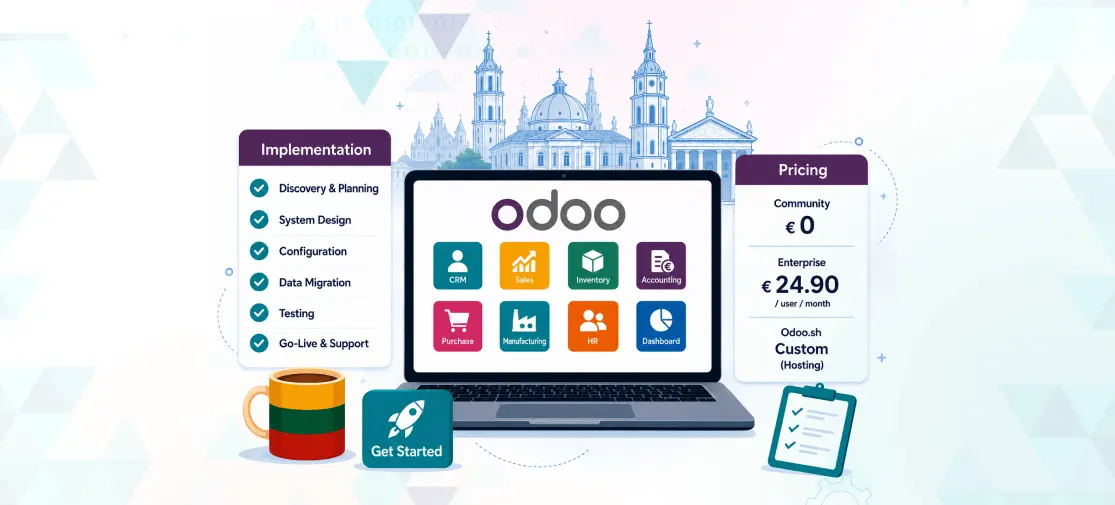
The cost of implementing Odoo in Malta depends on several factors, including the number of users, selected modules, business complexity, customization requirements, integrations, data migration, and user training. While Odoo licensing follows a per-user pricing model for the Enterprise edition, the overall implementation cost is primarily determined by the scope of your project rather than the software alone.
A standard implementation with core modules typically requires less investment than a multi-company deployment involving custom workflows, third-party integrations, manufacturing, or advanced reporting. When comparing Odoo partners, request a detailed proposal that clearly outlines implementation, customization, data migration, training, and post-go-live support so you can accurately compare the overall value rather than just the initial project cost.
Calculate Your Odoo Implementation Cost & Timeline
Understand the estimated cost, implementation timeline, and recommended project scope before starting your Odoo journey. Receive an estimate tailored to your business needs.
Common Pitfalls When Implementing Odoo in Malta
Many Odoo implementation challenges can be avoided with proper planning and an experienced implementation partner. Being aware of these common pitfalls helps businesses achieve a smoother deployment and better long-term results.
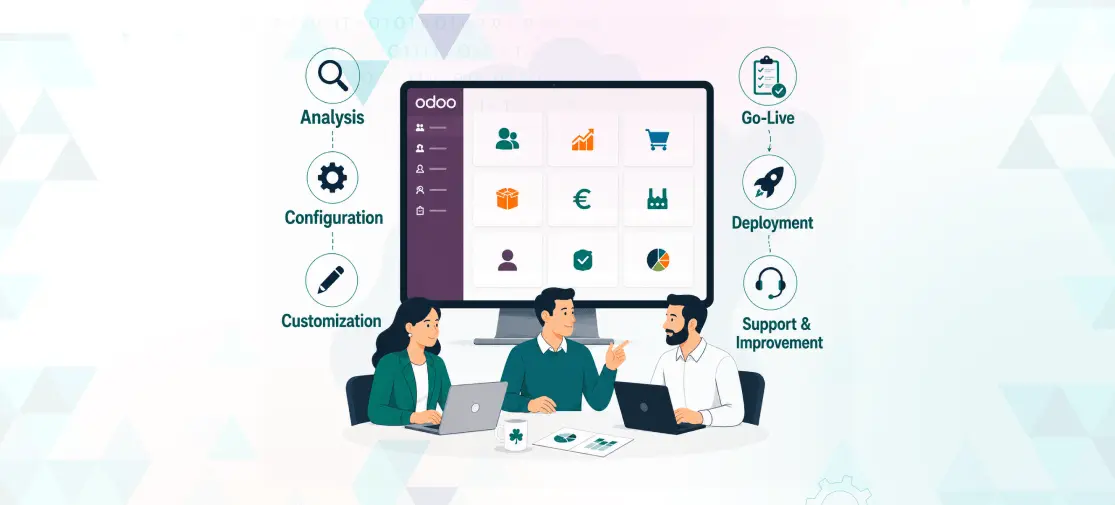
- Skipping the process analysis stage: Implementing Odoo without first reviewing existing business processes often results in inefficient workflows being replicated instead of improved.
- Incomplete VAT and regulatory configuration: Generic ERP configurations may not fully address Malta's VAT requirements, intra-EU tax rules, or CFR reporting, leading to compliance issues and additional rework.
- Insufficient user training: Even the best ERP implementation will struggle if employees are not properly trained. Investing in user adoption helps teams use the system effectively from day one.
- No upgrade and maintenance strategy: Odoo receives regular updates and new features. Without ongoing maintenance and version planning, businesses may miss important improvements, security updates, and compatibility enhancements.
- Choosing a partner based on price alone: The lowest implementation cost does not always provide the best long-term value. Experience, industry expertise, implementation quality, and post-go-live support are equally important when selecting an Odoo partner.
Choosing Your Odoo Partner
Choosing the right Odoo partner is key to a successful ERP implementation. An experienced partner will help you configure Odoo around your business processes, ensure regulatory compliance, and support your long-term growth.
As an Official Odoo Partner, Techvoot Solutions helps businesses across Malta with Odoo implementation, customization, migration, integration, training, and ongoing support. Whether you're planning a new deployment or upgrading your existing ERP, our team can help you achieve a smooth and successful implementation.
FAQ
What makes an Odoo partner the best in Malta?
The best Odoo partner combines certified technical expertise with experience in Malta's VAT regulations, CFR reporting requirements, and industry-specific implementations. Look for a partner with a proven track record, structured implementation methodology, and reliable post-go-live support.
How much does Odoo implementation cost in Malta?
Implementation costs vary depending on the number of users, selected modules, customization, integrations, data migration, and training requirements. Request a detailed proposal that clearly outlines the project scope, implementation services, and ongoing support before making a decision.
Which industries in Malta use Odoo ERP the most?
Odoo is widely used across Malta's iGaming and technology, professional services, finance, retail, wholesale, manufacturing, hospitality, tourism, real estate, and construction sectors to improve operational efficiency and business management.
Is Odoo suitable for small businesses in Malta?
Yes. Odoo's modular architecture allows small businesses to start with core applications such as Accounting, CRM, or Sales and expand with additional modules as their business grows.
Does Odoo support Malta's VAT and regulatory requirements?
Yes. Odoo can be configured to support Malta's VAT structure, intra-EU tax rules, CFR reporting requirements, and other local compliance needs when implemented and configured correctly.
How long does an Odoo implementation take?
Implementation timelines depend on the size and complexity of the project. Smaller implementations can often be completed within a few weeks, while larger, multi-company or highly customized deployments typically require a longer implementation period.
What is the difference between Odoo Community and Odoo Enterprise?
Odoo Community is the free, open-source edition that includes essential business applications. Odoo Enterprise offers additional advanced features, official support, enhanced functionality, and access to the complete suite of Odoo applications, making it the preferred choice for growing businesses.
Can Odoo integrate with existing business applications?
Yes. Odoo integrates with a wide range of accounting systems, payment gateways, eCommerce platforms, third-party applications, and business software, allowing organizations to create a connected and centralized business management platform.
Author Bio

 as
as