Introduction
If you're evaluating Odoo partners in Luxembourg, you've likely noticed that most providers make the same promises-certified consultants, tailored implementations, and end-to-end support. What they rarely explain is how they'll handle Luxembourg's accounting requirements, VAT compliance, business processes, and long-term ERP success.
This guide goes beyond marketing claims to help you evaluate what truly matters when choosing an Odoo partner. You'll learn which certifications are important, the local compliance requirements every implementation should address, and the key factors to compare before making your decision.
What Does an Odoo Partner Actually Do?
Odoo develops the ERP platform and provides the software licenses, but the implementation is carried out by its certified partner network. An Odoo partner helps businesses analyze requirements, configure modules, migrate data, integrate existing systems, train users, and provide ongoing support after go-live.
Odoo recognizes partners under different tiers based on their experience, certifications, and project delivery capabilities.
- Ready Partner - Suitable for smaller projects and businesses with relatively straightforward implementation requirements.
- Silver Partner - Well-suited for SMEs requiring multi-module implementations, integrations, and ongoing support.
- Gold Partner - Best equipped for large-scale, multi-company deployments with complex business processes and enterprise-level requirements.
Partner tier is an important consideration, but it shouldn't be the only one. Industry experience, knowledge of Luxembourg's accounting and compliance requirements, implementation methodology, and long-term support often have a greater impact on project success than the partner's tier alone.
Why Odoo is Gaining Ground With Luxembourg Businesses
Luxembourg businesses are increasingly replacing disconnected software with integrated ERP platforms that can support growth, regulatory compliance, and cross-border operations. Odoo has become a preferred choice for many SMEs because it offers the flexibility to manage finance, sales, inventory, operations, and customer relationships within a single system.
Several factors are contributing to this growing adoption:
- Scalable Implementation - Businesses can start with the modules they need today and expand the system as operations grow, avoiding the cost and complexity of replacing software later.
- Luxembourg Accounting and Tax Support - Built-in localization for PCN 2020, VAT configuration, and eCDF reporting helps businesses implement accounting processes that align with local regulatory requirements.
- Built for Cross-Border Business - With many Luxembourg companies operating across Belgium, France, and Germany, support for multiple companies, currencies, and languages simplifies international operations.
Choosing Odoo, however, is only part of the decision. The success of an ERP project depends on selecting an implementation partner who understands your business processes, compliance obligations, and long-term operational goals-not simply deploying the software.
What to Check Before Signing With an Odoo Partner in Luxembourg
Choosing the right implementation partner is just as important as selecting the ERP itself. Before making a decision, evaluate these key areas.
1. Official Odoo Partnership
Work with an Official Odoo Partner that has certified consultants and a proven implementation track record. Verify their status through Odoo's official partner directory.
2. Luxembourg Compliance Expertise
Your partner should understand Luxembourg's accounting standards, VAT regulations, eCDF reporting, and Peppol e-invoicing requirements to ensure long-term compliance.
3. Industry Experience
Look for experience in your industry, whether it's construction, retail, manufacturing, fiduciary services, or professional consulting. Similar project experience reduces implementation risks.
4. Implementation Process
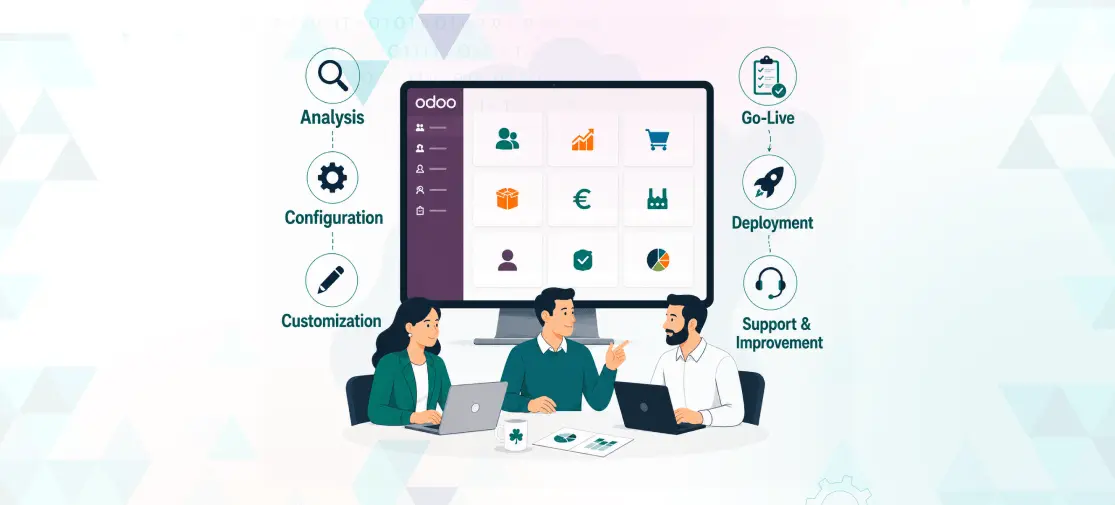
A reliable partner should follow a structured methodology covering discovery, configuration, data migration, testing, training, and post-go-live support.
5. Transparent Pricing
Request a detailed proposal that clearly separates implementation, customization, migration, training, and licensing costs so you understand exactly what you're paying for.
6. Long-Term Support
ERP systems continue to evolve after launch. Choose a partner that provides ongoing support, upgrades, training, and system optimization as your business grows.
Need Help Evaluating Odoo Partners?
Planning an Odoo implementation in Luxembourg? Our experts can help you compare partners, evaluate proposals, and choose the right implementation approach.
Which Industries in Luxembourg Use Odoo Most
Odoo is used across a wide range of industries in Luxembourg, but adoption is strongest among businesses that need to manage operations, compliance, and financial processes through a single platform. The following sectors account for many of the country's ERP implementations.
1. Accounting & Fiduciary Firms
Accounting firms and fiduciaries manage multiple client accounts while complying with Luxembourg's accounting and tax regulations. Odoo helps centralize financial operations, simplify reporting, and improve efficiency across multiple client organizations.
2. Construction & Renovation
Construction companies use Odoo to gain better control over project costs, procurement, subcontractors, and financial reporting. A connected ERP system improves project visibility while reducing manual coordination between teams.
3. Real Estate & Property Management
Property management businesses rely on Odoo to streamline tenant management, recurring billing, maintenance activities, and financial administration. This reduces manual work while improving visibility across multiple properties.
4. Food, Hospitality & Retail
Restaurants, cafés, retailers, and hospitality businesses adopt Odoo to connect point-of-sale, inventory, purchasing, and customer operations. Keeping these functions within one system helps improve stock accuracy and day-to-day operational efficiency.
5. IT, Consulting & Professional Services
Professional service firms use Odoo to manage customer relationships, projects, timesheets, and invoicing through a single workflow. This improves project visibility while simplifying billing and resource management.
Financing an Odoo Project in Luxembourg
Many Luxembourg SMEs may be eligible for financial support when implementing Odoo. Through the SME Packages - Digital program, eligible businesses can receive funding for digital transformation projects, including ERP systems such as Odoo, helping reduce the overall cost of implementation.
The program can cover up to 70% of eligible project costs, with grants of up to €17,500, provided the project meets the required eligibility criteria. Commercial businesses apply through the House of Entrepreneurship, while craft businesses apply through eHandwierk.
If you're planning an Odoo implementation, it's worth discussing this funding opportunity with your implementation partner early in the project. An experienced partner can help define a project scope that aligns with the program's eligibility requirements.
Common Mistakes Businesses Make When Choosing an Odoo Partner
Choosing the wrong implementation partner can lead to delays, unexpected costs, and a system that doesn't support your business effectively. Avoid these common mistakes when evaluating Odoo partners.
- Choosing Price Over Experience - The lowest quote doesn't always deliver the best value. Industry expertise and implementation quality often have a much greater impact on long-term success.
- Ignoring Local Compliance Expertise - A partner should understand Luxembourg's accounting standards, VAT regulations, eCDF reporting, and Peppol requirements-not just the technical side of Odoo.
- Not Checking Industry References - Experience in your sector matters. Ask for relevant case studies or client references to understand how the partner has handled businesses with similar requirements.
- Overlooking Long-Term Support - ERP implementation doesn't end at go-live. Ensure your partner provides ongoing support, training, upgrades, and system optimization as your business evolves.
- Rushing the Selection Process - Choosing a partner without comparing proposals, implementation approaches, and project scope can lead to unnecessary costs and avoidable project risks.
Planning an Odoo Implementation in Luxembourg?
Whether you're implementing Odoo, migrating from another ERP, or expanding your existing system, Techvoot delivers end-to-end Odoo services tailored to your business needs.
Conclusion
Luxembourg businesses have no shortage of Odoo partners to choose from, but the right decision isn't about selecting the largest provider or the lowest quote. It's about finding a team that understands your industry, your compliance obligations, and the way your business actually operates. When those factors align, Odoo becomes more than an ERP-it becomes the operational foundation for future growth.
If you're comparing implementation partners or reviewing proposals, Techvoot can help you evaluate the best approach for your business and ensure your Odoo project starts on the right foundation.
FAQ
What does an Odoo partner do?
An Odoo partner helps businesses plan, implement, customize, integrate, and support Odoo based on their operational requirements. While Odoo provides the software, the implementation partner is responsible for configuring the system, migrating data, training users, and providing ongoing support.
How do I choose the best Odoo partner in Luxembourg?
Look for an Official Odoo Partner with experience in your industry, knowledge of Luxembourg's accounting and compliance requirements, a structured implementation methodology, transparent pricing, and reliable post-go-live support.
Is Odoo suitable for small and medium-sized businesses in Luxembourg?
Yes. Odoo's modular approach allows SMEs to start with the applications they need and expand as the business grows. Its localization for Luxembourg accounting and tax requirements also makes it a practical choice for many local businesses.
Can Luxembourg businesses receive funding for an Odoo implementation?
Yes. Eligible SMEs may qualify for financial support through the SME Packages – Digital program, which helps fund digital transformation projects, including ERP implementations such as Odoo, subject to the program's eligibility requirements.
How long does an Odoo implementation typically take?
Implementation timelines depend on the project's complexity. Smaller implementations usually take 4–8 weeks, while larger, multi-module deployments with integrations and data migration can take several months.
Author Bio

 as
as