Introduction
Businesses across the United Kingdom are investing in ERP systems to simplify operations, improve financial visibility, and replace disconnected business software with one integrated platform. As compliance requirements such as Making Tax Digital (MTD) continue to shape how businesses manage accounting and reporting, Odoo has become a preferred ERP solution for manufacturers, wholesalers, retailers, and professional service firms.
Before starting an Odoo implementation, it's important to evaluate project costs, UK compliance requirements, and the experience of the implementation partner responsible for delivering the solution.
Why More Businesses in the UK Are Choosing Odoo ERP
Businesses across the United Kingdom are choosing Odoo ERP to improve operational efficiency and replace disconnected systems with one integrated platform. As organizations grow, managing finance, sales, inventory, purchasing, and customer operations across multiple applications becomes increasingly difficult. Odoo helps simplify these processes while providing greater visibility across the business.
- Odoo allows businesses to implement the applications they need today and expand the platform as operations evolve. This phased approach makes ERP adoption more manageable while supporting long-term business growth.
- Bringing accounting, sales, purchasing, inventory, manufacturing, and customer management into one system reduces duplicate work, improves data accuracy, and helps teams collaborate more effectively.
- Odoo can be configured to match existing workflows instead of forcing businesses to adapt to rigid software. This flexibility helps organizations improve productivity while supporting changing operational requirements.
Why UK Businesses Are Rapidly Adopting Odoo ERP
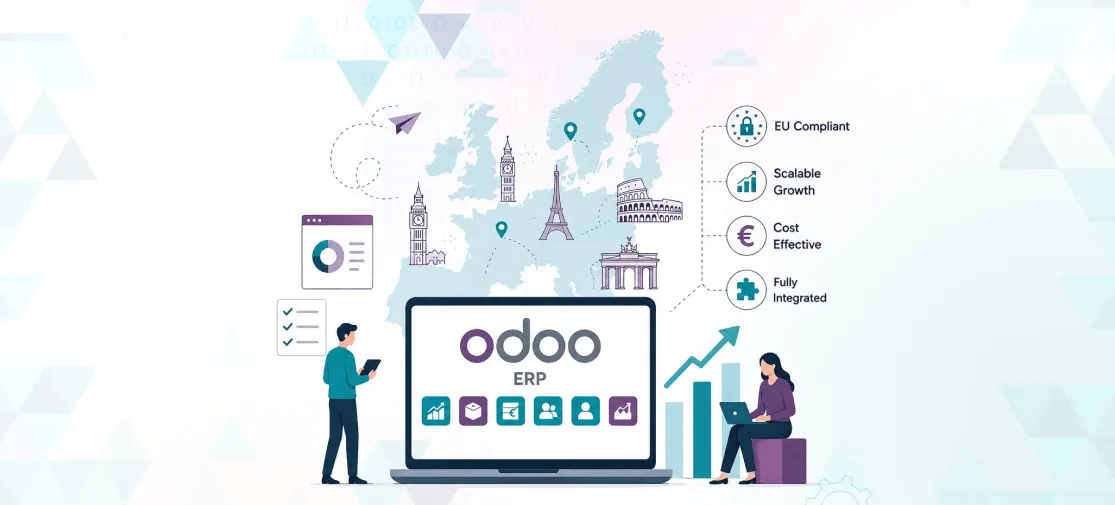
UK businesses are increasingly choosing Odoo ERP to simplify operations, improve business visibility, and support long-term growth. Its flexible architecture, scalable deployment, and ability to adapt to different industries make it a practical ERP solution for small and medium-sized businesses as well as growing enterprises.
Cost-Effective ERP
Unlike many traditional ERP platforms, Odoo allows businesses to implement only the applications they need and expand as requirements grow. This helps control implementation costs while providing the flexibility to scale over time.
Flexible Business Operations
Every business operates differently. Odoo can be configured around existing workflows, helping organizations improve efficiency without replacing established business processes.
Connected Business Management
Bringing finance, sales, inventory, purchasing, manufacturing, and customer management into one platform reduces manual work, improves data accuracy, and gives decision-makers better visibility across the business.
Built for Business Growth
Whether expanding into new locations, adding users, or introducing new business functions, Odoo provides a scalable foundation that grows alongside the organization without requiring a complete system replacement.
UK Compliance Requirements for Odoo ERP
UK businesses need an ERP system that supports local accounting and tax requirements while adapting to changing regulations. Configuring Odoo correctly from the beginning helps improve financial accuracy, reduce manual work, and support ongoing compliance.
- Making Tax Digital (MTD) - Odoo can be configured to support HMRC's Making Tax Digital requirements, helping businesses maintain digital records and submit VAT returns efficiently.
- UK VAT Configuration - Proper VAT setup ensures accurate tax calculations, invoicing, and financial reporting.
- Business Integrations - Odoo connects with UK banking systems, payment gateways, and other business applications to streamline financial operations.
Working with an experienced Odoo implementation partner helps ensure these requirements are configured correctly from the start.
Industries in the UK Using Odoo ERP
Odoo supports businesses across the United Kingdom by helping improve operational efficiency, automate business processes, and connect finance, sales, inventory, and operations within a single ERP platform.
Manufacturing
The UK manufacturing sector continues to invest in digital technologies to improve productivity, production planning, inventory control, and supply chain visibility. Odoo helps manufacturers streamline day-to-day operations while supporting business growth.
Wholesale & Distribution
Wholesale and distribution businesses manage complex supply chains, multiple suppliers, and high inventory volumes. Odoo helps improve stock visibility, purchasing workflows, and order fulfillment while reducing manual administration.
Retail & eCommerce
Retailers and eCommerce businesses use integrated ERP systems to connect online sales, physical stores, inventory, and customer operations. This helps maintain accurate stock levels, improve customer experience, and simplify business management.
Professional Services
Consultancies, engineering firms, technology companies, and other professional service providers use Odoo to improve project management, resource planning, customer relationships, and financial visibility through one connected business platform.
Why Businesses in the UK Work with Techvoot for Odoo ERP
Successful Odoo implementation goes beyond software configuration. It requires understanding business processes, operational challenges, and long-term growth objectives. Techvoot works with manufacturers, wholesalers, retailers, eCommerce businesses, and professional service firms across the United Kingdom to deliver Odoo ERP solutions tailored to their operational requirements.
Every project starts with understanding how the business operates before recommending modules, customizations, or integrations. From implementation and data migration to system integration, user training, and ongoing support, Techvoot follows a structured approach that helps businesses maximize the value of their Odoo investment while supporting future growth.
How an Odoo ERP Implementation Works
A successful Odoo implementation follows a structured process that helps reduce risks and ensures the system supports your business from day one.
- Business Discovery: Understand existing workflows, operational challenges, and implementation goals before defining the project scope.
- System Configuration: Configure Odoo modules, business workflows, user roles, and UK-specific settings based on your operational requirements.
- Data Migration: Transfer customers, products, inventory, financial records, and other business data while validating accuracy before deployment.
- Integration & Testing: Connect Odoo with business applications such as accounting systems, payment gateways, logistics providers, or eCommerce platforms, followed by end-to-end testing.
- User Training & Go-Live: Train employees on daily operations before launching the ERP system to support a smooth transition.
- Ongoing Support & Optimization: Monitor system performance, implement updates, and optimize workflows as business requirements continue to evolve.
Final Thoughts: Choosing the Right Odoo Partner in the UK
As businesses across the United Kingdom continue to modernize their operations, Odoo remains a practical ERP solution for improving efficiency, visibility, and business performance. Taking the time to evaluate implementation experience, UK compliance knowledge, and long-term support will help ensure your ERP investment delivers lasting value.
If you're evaluating Odoo for your business, discuss your ERP requirements with an Odoo expert before starting your implementation project.
FAQ
How much does Odoo ERP implementation cost in the UK?
Odoo ERP implementation costs in the UK typically range from £8,000–£20,000 for small businesses, £20,000–£60,000 for mid-sized companies, and £60,000+ for large or highly customized implementations. The final cost depends on the number of users, selected modules, integrations, data migration, and customization requirements.
Does Odoo support UK VAT and Making Tax Digital (MTD)?
Yes. Odoo supports UK VAT processes and can be configured to meet HMRC's Making Tax Digital (MTD) requirements. With the correct UK localization, businesses can manage digital records, VAT reporting, and financial processes more efficiently.
How long does an Odoo ERP implementation take?
A standard Odoo implementation usually takes 6–12 weeks, depending on the project scope. Larger projects involving multiple departments, custom development, integrations, or complex data migration may take 3–9 months.
Is Odoo suitable for small and medium-sized businesses in the UK?
Yes. Odoo's modular architecture allows SMEs to start with essential applications such as Accounting, CRM, or Inventory and expand into Manufacturing, Purchasing, HR, or eCommerce as business requirements grow.
Why should I work with an Official Odoo Partner?
An Official Odoo Partner provides certified implementation expertise, follows proven deployment practices, and offers ongoing support after go-live. This helps reduce implementation risks, ensures the ERP system is configured correctly, and supports long-term business growth.
Author Bio

 as
as















.jpg "Anonyms")


