Introduction
Montenegro's economy is driven by small and medium-sized businesses across retail, tourism, manufacturing, logistics, and professional services. As these businesses grow, managing accounting, inventory, sales, HR, and customer data across multiple systems becomes increasingly difficult.
Odoo ERP helps consolidate these operations into a single business management platform, improving efficiency, visibility, and compliance. This guide explains how Odoo fits Montenegro's business landscape, which industries benefit most, and what to consider when choosing an implementation partner.
What is Odoo ERP and Why It Fits Montenegro's Business Landscape
Odoo is a modular ERP and business management platform that enables businesses to manage accounting, inventory, sales, CRM, manufacturing, HR, and other core operations within a single connected system. Instead of forcing every company into one rigid package, Odoo allows businesses to activate only the applications they need and add new modules as their operations grow.
This flexibility makes Odoo particularly well-suited to Montenegro's business landscape, where SMEs, family-owned businesses, and tourism-driven companies make up a significant share of the economy. Whether it's a small retail store or a growing manufacturing company, Odoo scales with the business, allowing organizations to expand their ERP capabilities without paying for unnecessary functionality.
Local Compliance: Fiscalization and VAT Reporting
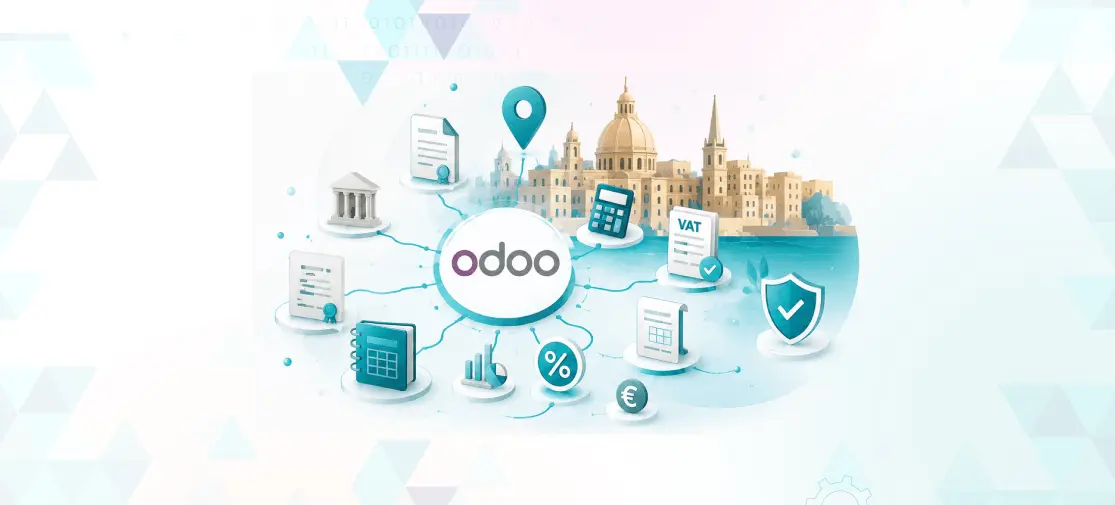
Montenegro requires real-time fiscalization for cash transactions through certified software. Odoo's integrated Accounting and Point of Sale modules help businesses simplify fiscal reporting and support local compliance.
As VAT regulations continue to evolve, including the introduction of the "ME" prefix for VAT registration numbers, Odoo enables businesses to manage invoicing and tax reporting within a single ERP system. It also supports structured digital invoicing, helping businesses prepare for future e-invoicing requirements.
Industries in Montenegro Using Odoo ERP
Odoo ERP is widely adopted across industries in Montenegro where businesses need better control over inventory, operations, customer relationships, and financial processes. Its modular approach makes it particularly valuable for sectors with seasonal demand, multi-location operations, or complex production workflows.
Wholesale, Retail & Distribution
Wholesale distributors and retail businesses use Odoo to manage multi-warehouse inventory, automate purchasing through reorder rules, and keep point-of-sale transactions synchronized across physical stores and online sales channels. Real-time inventory visibility reduces stock discrepancies, prevents overselling, and minimizes the time spent on manual stock counts.
Food, Hospitality & Tourism
Hotels, restaurants, cafés, and tour operators rely on Odoo to manage bookings, point-of-sale operations, inventory, and customer service within a single platform. The system also supports Montenegro's fiscalization requirements, helping hospitality businesses handle high volumes of daily cash and card transactions while maintaining accurate inventory during peak tourist seasons.
Is Your Business Ready for Odoo ERP?
Many businesses invest in ERP software before understanding which modules they actually need. Get a personalized Odoo readiness assessment and discover the right implementation approach for your business before making any investment.
Professional Services & IT
Professional service providers use Odoo to manage projects, record employee timesheets, track billable work, and generate accurate client invoices. A centralized system helps improve collaboration, reduce manual administration, and provide better insight into project performance.
Manufacturing & Construction
Odoo helps manufacturers and construction businesses manage production planning, inventory, field service operations, and project activities through a single integrated platform. This enables better resource planning, improved cost control, and greater operational efficiency.
Where Odoo Adoption Is Concentrated Across Montenegro
Odoo adoption in Montenegro closely reflects the country's major business, industrial, and tourism centers, where companies require integrated ERP software to manage growing operations efficiently.
Podgorica: As Montenegro's capital and largest commercial hub, Podgorica has the highest concentration of retail chains, distributors, professional service firms, and corporate offices adopting Odoo ERP to streamline finance, inventory, sales, and multi-department operations.
Budva, Kotor, and Herceg Novi: These coastal destinations form the heart of Montenegro's tourism industry. Hotels, restaurants, marinas, and retailers rely heavily on Odoo's Point of Sale, booking, inventory, and CRM modules to manage seasonal demand, customer service, and high transaction volumes.
Bar and Nikšić: Bar's logistics and port operations, together with Nikšić's manufacturing and industrial businesses, drive demand for inventory management, warehouse operations, manufacturing (MRP), and supply chain modules rather than the hospitality-focused applications commonly used along the coast.
Core Odoo Modules Montenegrin Businesses Rely On
Montenegrin businesses typically begin with the Odoo modules that support their day-to-day operations, then expand the system as their requirements grow. The following modules are among the most widely adopted across industries.
Accounting & Invoicing
Simplifies accounting with invoice generation, bank reconciliation, tax reporting, and financial records while adapting to regulatory changes such as VAT identification updates without requiring major system modifications.
Point of Sale (POS)
Operates on tablets and other supported devices, continues functioning during temporary network interruptions, and automatically updates inventory after every sale, making it well suited for retail and hospitality businesses during peak tourist seasons.
CRM & eCommerce
Connects physical stores with online sales channels, centralizes customer information, tracks sales opportunities and follow-ups, and supports targeted marketing campaigns to improve customer engagement.
Inventory & Purchase
Provides real-time inventory visibility across multiple warehouses and store locations, automates purchasing through reorder rules, and helps maintain accurate stock levels while reducing manual inventory management.
Manufacturing (MRP) & Field Service
Helps manufacturers and construction companies manage bills of materials, production planning, workforce allocation, field operations, and project costs from a single platform.
HR & Timesheets
Manages employee records, attendance, leave requests, and timesheets while linking employee hours directly to project tracking and client billing for service-based businesses.
Key Benefits of Odoo ERP for Montenegrin Businesses
- One integrated business platform: Replacing multiple disconnected systems with a single Odoo ERP platform eliminates duplicate data entry, improves data accuracy, and saves valuable time across departments.
- Real-time business visibility: Owners and managers can monitor cash flow, inventory levels, sales performance, and other key business metrics in real time, enabling faster and more informed decision-making.
- Scalable as your business grows: Businesses can begin with essential modules such as Accounting and Point of Sale, then add CRM, Manufacturing, HR, or other applications as operational requirements evolve without migrating to a new ERP system.
- Lower total cost of ownership: Odoo's modular pricing approach allows businesses to invest only in the applications they need, making it a more cost-effective solution for SMEs than many traditional enterprise ERP platforms.
- Improved regulatory compliance: Integrated Accounting and Point of Sale modules help businesses meet Montenegro's fiscalization requirements and adapt more efficiently to evolving VAT regulations, reducing compliance risks and manual effort.
Avoid the Costly ERP Mistakes Most Businesses Make
The biggest implementation challenges often happen before the project even begins. Talk to an Odoo specialist to identify potential risks, select the right modules, and build an implementation roadmap tailored to your business goals.
How to Choose the Right Odoo Implementation Partner in Montenegro
Selecting the right implementation partner is just as important as choosing the ERP software itself. A well-planned Odoo implementation ensures the system is configured to match your business processes, supports local compliance requirements, and delivers long-term value. When evaluating an Odoo partner, consider the following:
- Official Odoo expertise with proven implementation experience, not just general software development capabilities.
- Industry-specific experience in configuring Odoo for businesses in sectors such as retail, hospitality, manufacturing, logistics, or professional services.
- A structured implementation approach with clearly defined phases, timelines, and project deliverables.
- Reliable post-implementation support to help your business adapt as operations grow, processes evolve, or regulatory requirements change.
- Transparent pricing that aligns with the modules, customization, training, and support your business actually requires.
Why Techvoot Solutions is a Trusted Odoo ERP Partner
Techvoot Solutions is an Official Odoo Partner with proven experience helping businesses implement and customize Odoo ERP across industries such as retail, manufacturing, hospitality, logistics, and professional services. Every implementation is designed around the way a business operates, ensuring the platform supports existing workflows, industry requirements, and future growth instead of forcing businesses to adapt to a standard setup.
For businesses in Montenegro, Techvoot Solutions works closely with organizations from the initial planning stage through deployment and beyond. The focus is on selecting the right Odoo modules, configuring the system to meet local compliance requirements, and providing long-term support so businesses can get the maximum value from their Odoo ERP investment.
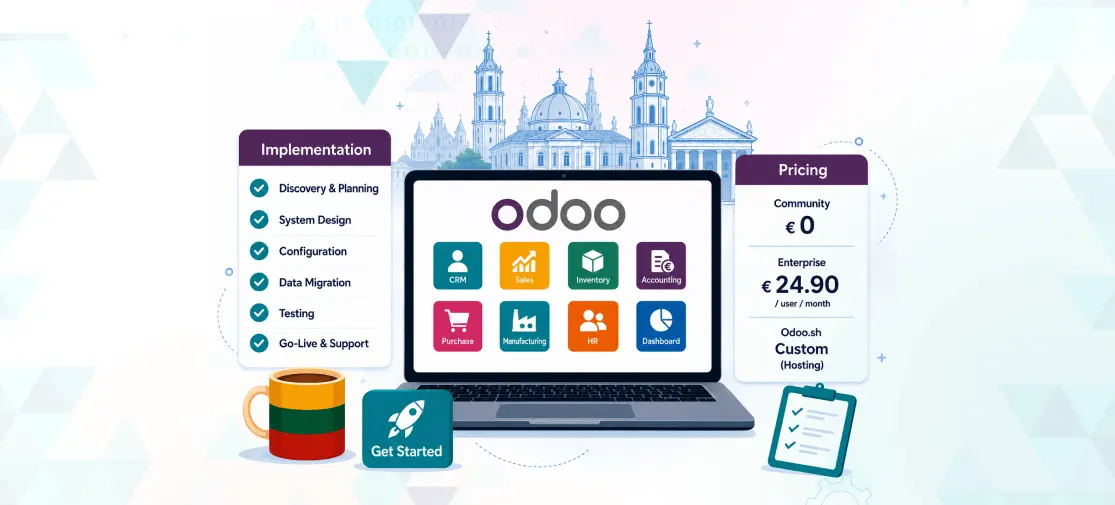
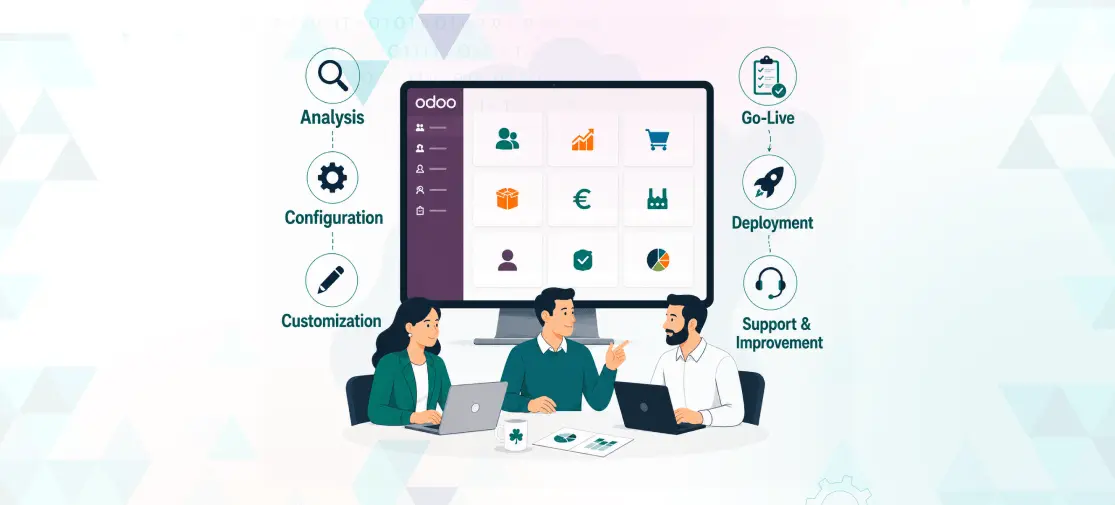
Odoo Implementation Roadmap: What to Expect
- Discovery & Needs Assessment: Understand your business processes, identify operational challenges, and determine the Odoo modules that best support your requirements.
- Module Selection & Configuration: Configure only the applications your business needs and tailor them to match existing workflows and operational goals.
- Data Migration: Securely transfer customer information, accounting records, inventory data, and other business information into the new Odoo ERP system while maintaining data accuracy.
- Testing & Staff Training: Validate business workflows, resolve configuration issues, and train employees to use the system with confidence from the first day of operation.
- Go-Live & Ongoing Support: Deploy the system with minimal disruption, monitor performance, and provide continuous support as your business grows and operational requirements evolve.
FAQ
Is Odoo ERP suitable for small businesses in Montenegro?
Yes. Odoo's modular structure lets small businesses start with a few core apps, such as accounting and POS, and add more modules only when needed, which keeps initial costs manageable.
Does Odoo support Montenegro's fiscalization requirements?
Odoo's accounting and POS modules can be configured to support real-time fiscal reporting, including the JIKR and QR code requirements set by Montenegro's Tax Administration.
Which Odoo modules do most Montenegrin businesses start with?
Accounting & Invoicing and Point of Sale are the most commonly adopted first modules, followed by Inventory and CRM as businesses expand their digital operations.
How long does an Odoo implementation take?
Timelines vary by business size and the number of modules involved, but a focused implementation covering core modules typically takes a few weeks to a few months, including data migration and staff training.
Can Odoo integrate with existing accounting or POS hardware in Montenegro?
Odoo is built to integrate with common POS hardware and can be configured to work alongside or replace existing fiscal devices, depending on the business's setup and compliance needs.
Is Odoo ERP affordable for SMEs compared to traditional ERP systems?
Odoo's pay-per-module, pay-per-user pricing generally costs less upfront than traditional enterprise ERP systems, since businesses only pay for the applications they actually use.
Author Bio

 as
as